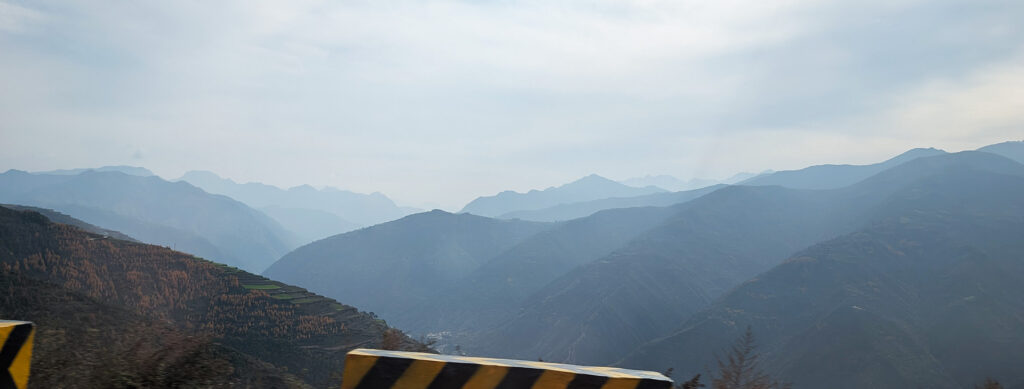
In our last trip to China in October, we travelled west from Qingdao to Gansu province to investigate organic apple production. Our flight took us into Lanzhou, a region that is strikingly dry and mountainous. From there, we drove to Longnan, where densely wooded mountains rise sharply and deep ravines cut through the landscape.
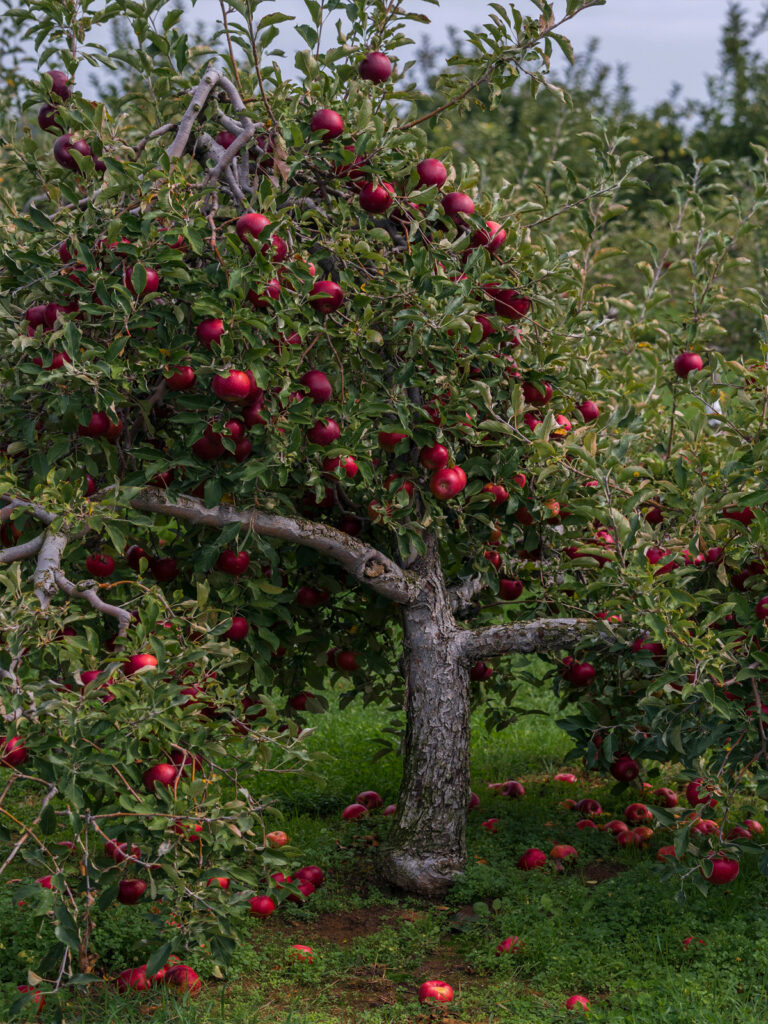
Despite the harsh terrain, this area is astonishingly productive. Around 80–90% of all apple production here is organic, an impressive achievement given the altitude. At 1,200 metres, these orchards thrive in conditions where, at 54°N in the UK, apple production simply isn’t viable. Many of the mountainsides are terraced, a testament to agricultural practices that have shaped the region for thousands of years.
What began in 2009 as just five large farms totalling 5,000 mu has expanded dramatically. By 2025, the region boasts 17,000 mu of certified organic orchards. This organic operation is part of a much larger enterprise, with a total of 600,000 mu under apple cultivation across both organic and conventional systems.
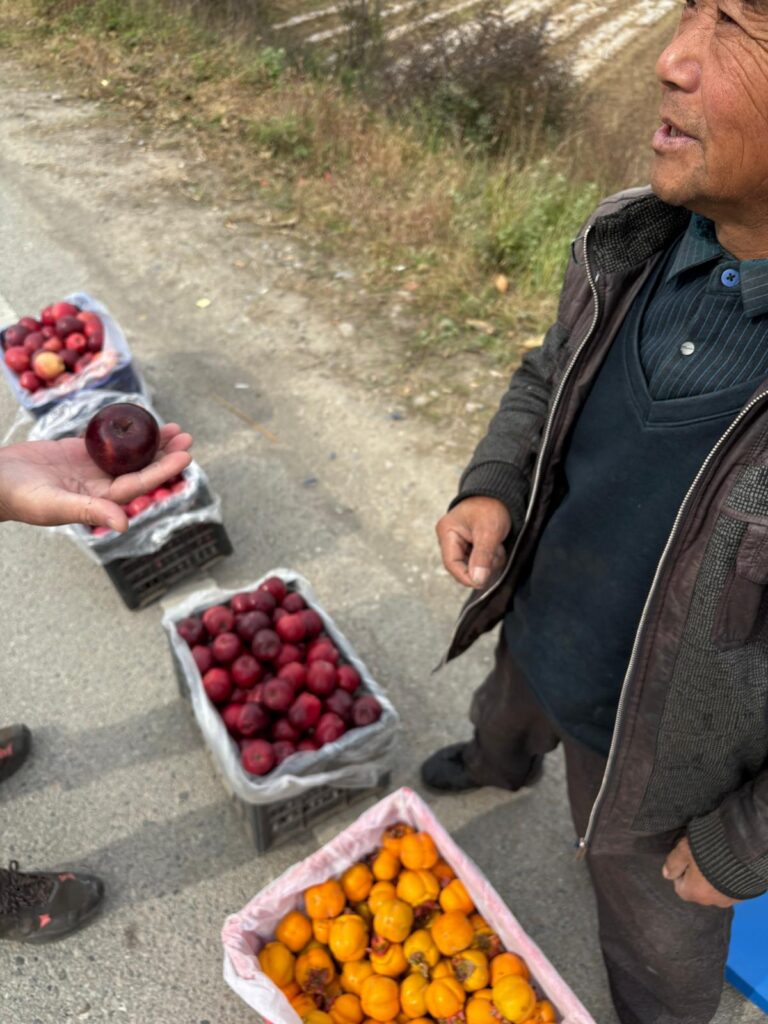
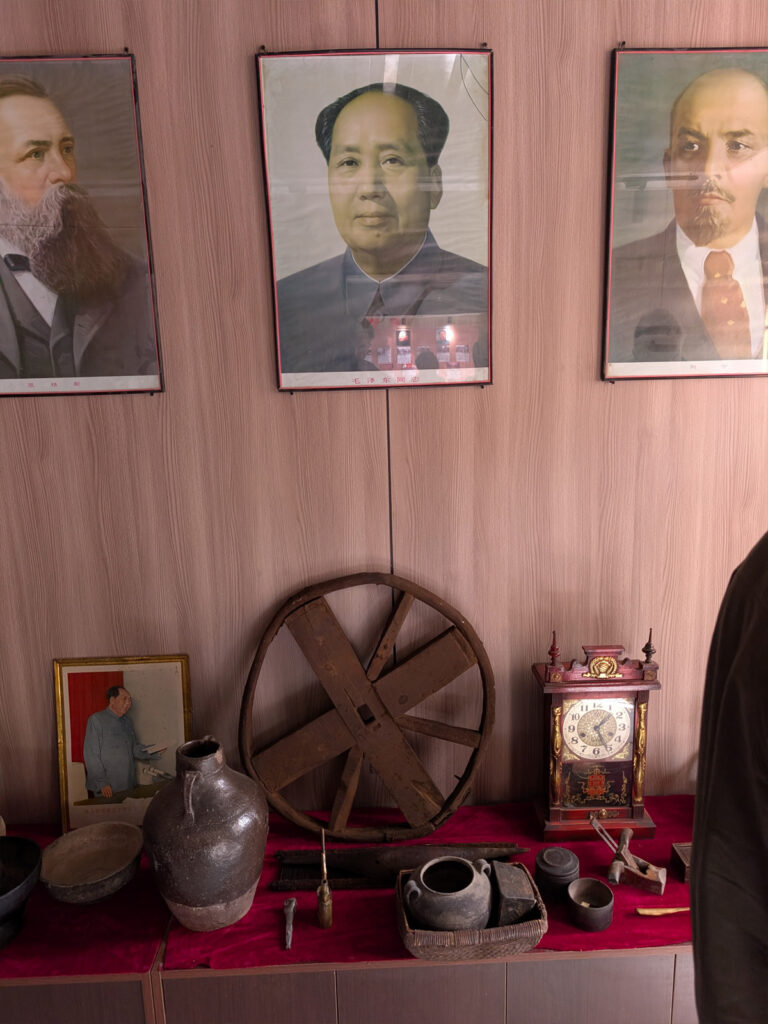
Gansu is famous for the Flower Ox variety, a sweet, low-acid apple with a bright, uniform red skin, visually similar to Red Delicious. Although the skin is firm, the flesh is particularly soft, making it popular with young children and older consumers. The variety has a colourful history. Decades ago, local farmers sent a carton of Flower Ox apples to Chairman Mao, who declared them his favourite. This endorsement quickly elevated the region’s reputation, and the apples became known by their alternative name: Red Marshall.